
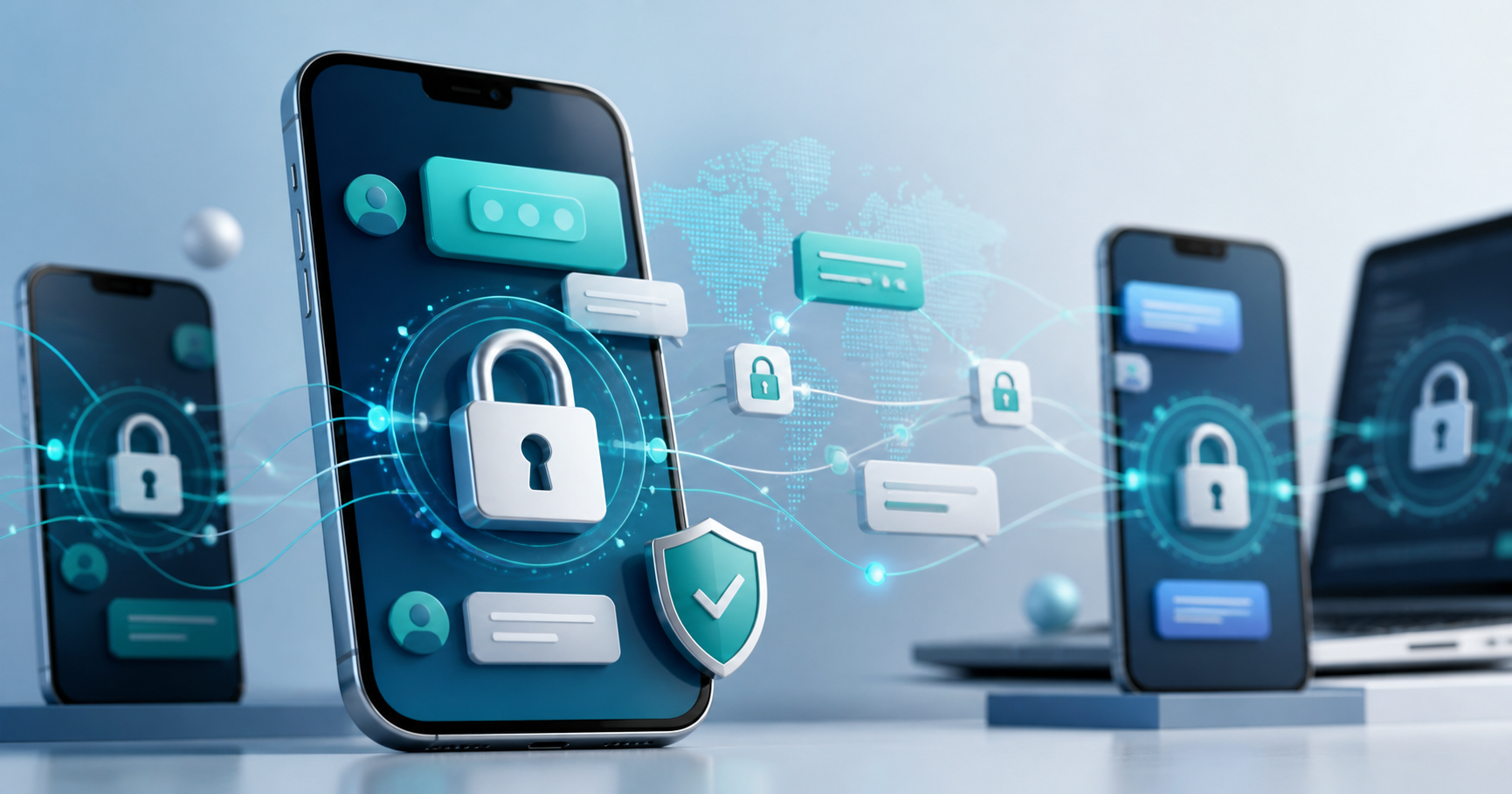
Encrypted RCS between Android and iPhone is rolling out, but SMS OTP and account recovery still need layered controls, fallback planning, and clean number hygiene.
Cross-platform messaging is getting a meaningful security upgrade. Google announced that end-to-end encrypted RCS messaging is beginning to roll out for conversations between Android and iPhone users, using the industry work around RCS Universal Profile and Messaging Layer Security. GSMA also described the rollout as a milestone for secure cross-platform messaging.
For everyday users, the practical point is simple: richer messages between Android and iPhone can become more private than old SMS. For businesses, developers, and support teams, it also changes how we think about verification, customer messaging, and recovery flows.
Why this matters for SMS users
SMS is still everywhere because it works across phones, banks, marketplaces, delivery apps, and social platforms. But SMS was not designed as a private modern messaging layer. It remains useful for broad reach and OTP delivery, yet it should not be treated as the only security control around an account.
Encrypted RCS can reduce exposure in personal conversations, but it does not automatically replace transactional SMS. Carrier support, device support, app support, and business sender workflows still determine what users actually receive.
What businesses should watch
RCS support will vary by carrier, device, and country during rollout.
Users may still receive OTPs, recovery codes, and alerts by SMS.
Business messaging teams should keep SMS fallback plans while monitoring RCS adoption.
Support agents should not ask customers to forward screenshots of verification codes.
Account recovery should combine OTPs with device checks, passkeys, backup codes, or risk scoring.
Where BillioPlus fits
BillioPlus helps users receive SMS verification codes online for supported services. That remains valuable for privacy-aware onboarding, QA testing, and non-critical account setup where a virtual number is accepted.
For long-term banking, primary email, crypto wallets, and high-value business accounts, keep recovery tied to a stable number you control and protect. Encrypted messaging is progress, but recovery hygiene still decides whether an account can be taken over after a mistake.
Conclusion
Encrypted RCS makes mobile messaging safer, but it does not remove the need for careful OTP habits. Treat SMS, RCS, passkeys, and recovery numbers as a layered system rather than a single magic fix.
Source: Google Android RCS encryption update and GSMA RCS E2EE announcement.
Tags
Chinedu Celestine Okpala
BillioPlus Team · Content & Guides