
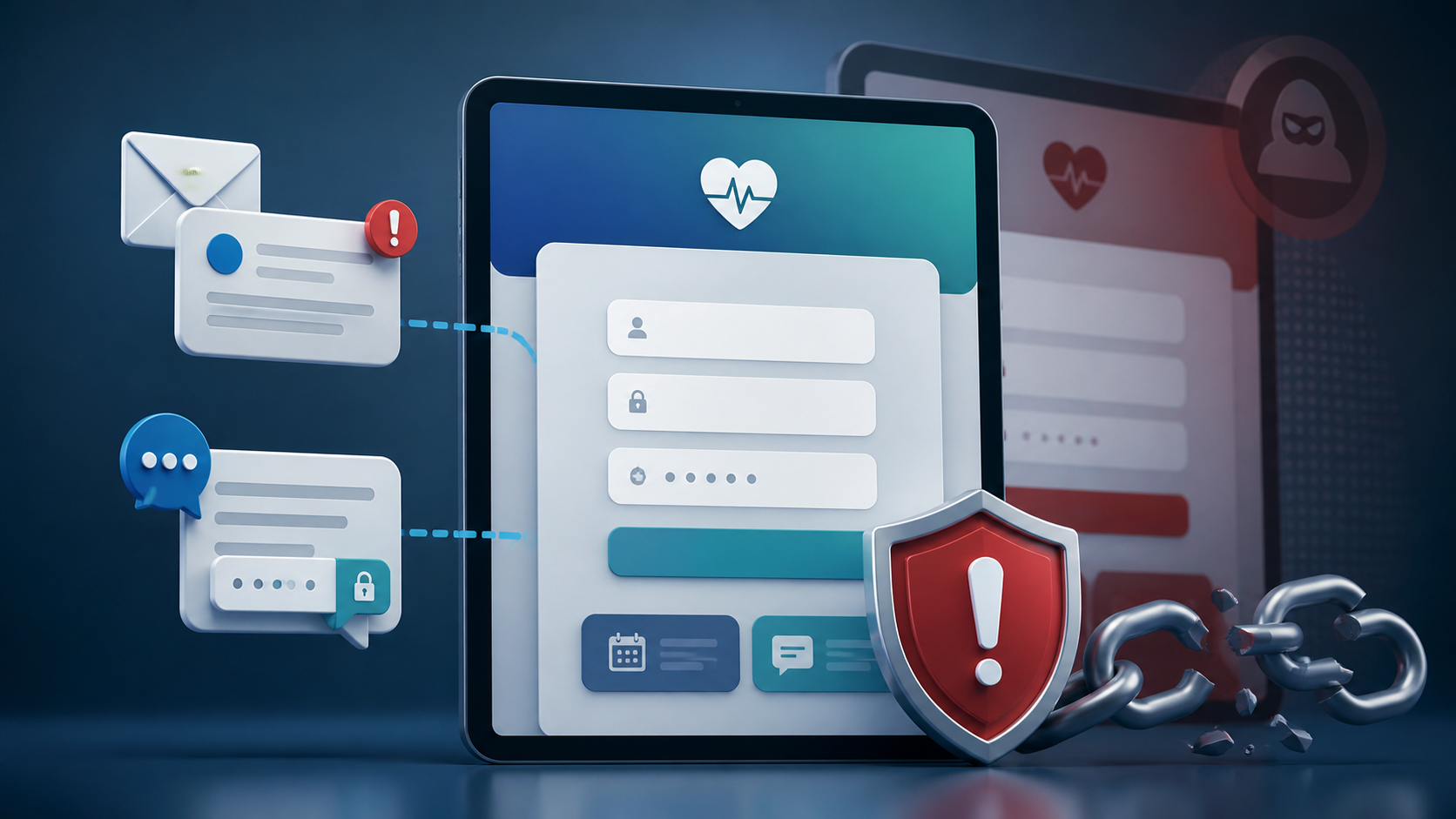
Recent MyChart phishing warnings show how scammers copy trusted brands, create fake urgency, and ask for credentials, codes, or downloads. The same pattern hits fintech and marketplace accounts.
A current MyChart phishing wave is a useful case study for every platform that sends login links, verification codes, appointment messages, or payment notices. The American Hospital Association reported on August 24, 2026, that Epic's MyChart had shared examples of phishing schemes seen during the month. The examples included fake MyChart websites, false medical-record messages, and offers such as a free 2026 Medicare Health Kit.
MyChart's own safety page says scammers are using the MyChart name and logo across emails, text messages, phone calls, and websites that appear official. The important detail is not limited to healthcare. Attackers use trusted names because users already expect urgent messages from them.
The pattern is familiar
The fake portal pattern usually has four steps. First, the attacker sends a message that looks normal. Second, the link opens a copied website. Third, the page asks for credentials, codes, or payment details. Fourth, the page adds urgency: your record is critical, your account will close, your parcel is blocked, your wallet is locked, or your ad account will be disabled.
That same structure can target banking apps, e-commerce sellers, crypto exchanges, social media dashboards, and virtual-number users. The brand changes, but the pressure is the same.
BillioPlus user guidance
- Open important accounts from the official app, bookmark, or typed domain.
- Do not enter OTP codes after clicking a link from an unexpected message.
- Check the full domain, not just the logo on the page.
- Do not download tools or run commands to unlock results, verify identity, or fix an account.
- Report suspicious messages and then delete them instead of replying.
What platforms should learn
Good security copy is specific. Instead of sending vague instructions such as "verify now," platforms should state what action triggered a code, what domain users should visit, and what staff will never ask for. For support teams, the rule should be simple: no agent should ask users to reveal passwords, verification codes, card PINs, private keys, or recovery phrases.
The MyChart wave is timely because it shows how phishing has become brand abuse plus workflow abuse. A secure OTP system still needs users who know when to slow down.
Source links
Tags
Chinedu Celestine Okpala
BillioPlus Team · Content & Guides