
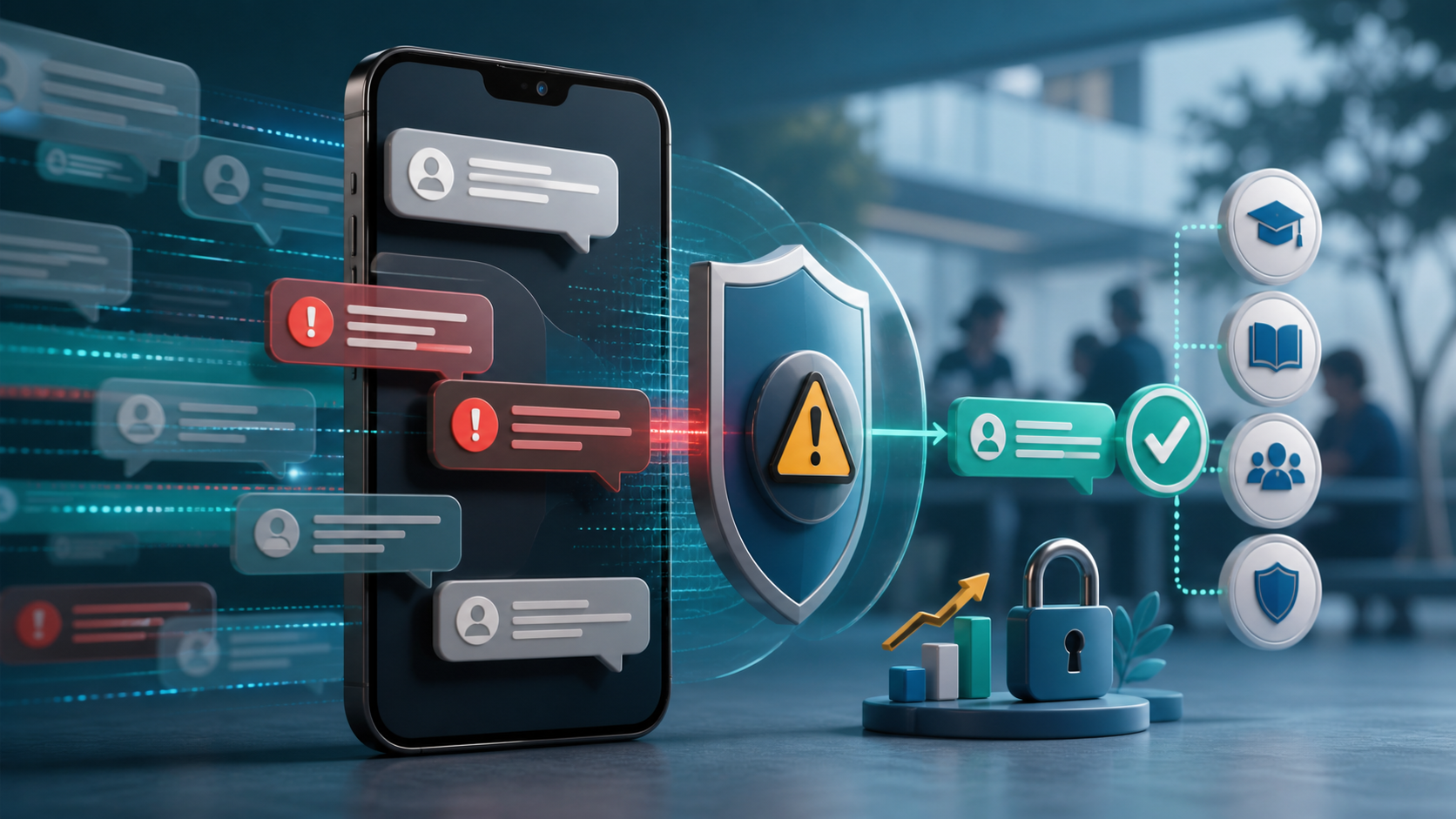
A new August 2026 smishing study points to younger users and students as high-risk groups. OTP warnings need clearer timing, context, and action language.
Smishing is still one of the fastest ways attackers turn a phone number into an account takeover. A new research paper posted on August 25, 2026, reviewed SMS phishing risk and pointed to a pattern that platforms should not ignore: younger individuals, including college students, can be especially exposed to mobile-first deception.
The lesson is not that younger users are careless. It is that attackers design messages for speed, habit, and small screens. A text message arrives while the user is moving, studying, working, or switching between apps. The fake delivery notice, account warning, job offer, scholarship update, wallet alert, or marketplace message asks for one quick action before the user has time to inspect the sender.
Why OTP warnings must be specific
Generic warnings are easy to dismiss. A useful OTP warning should explain the action that triggered the code, the service requesting it, and what the user should do if they did not start the login. If a code is for account recovery, payment approval, password reset, or device linking, the message should say so clearly.
The FBI's spoofing and phishing guidance also highlights the same practical defense: do not click unsolicited links, do not trust caller ID or sender names alone, and use additional authentication where available. That advice becomes stronger when platforms make the warning easy to understand at the exact moment the user receives the code.
What BillioPlus users should do
- Treat every unexpected OTP as a warning, not a shortcut.
- Open accounts through the official app or typed domain instead of message links.
- Never send a code to a buyer, seller, support agent, recruiter, or friend.
- Check whether the code is for login, reset, payment, or device linking.
- Report suspicious SMS messages and delete them after reporting.
What platforms should improve
For services that send verification messages at scale, this is a product-design issue as much as a security issue. Under-24 users and university communities often live inside fast message flows, so warnings should be short, specific, and timed to the risky action. The strongest message is not the longest one. It is the one that interrupts the attack with clear context.
BillioPlus will continue to treat verification-code safety as more than delivery success. Fast SMS is useful, but secure SMS also needs context, throttling, fraud monitoring, and user education that matches how people actually use phones.
Source links
Tags
Chinedu Celestine Okpala
BillioPlus Team · Content & Guides